Myth: It is ancient tradition that each of the clans of Scotland has it's own unique tartan.
Sadly, this is a myth. I've always thought it was rather fun to find the family tartan. But this 'tradition' is actually the result of a 19th century marketing scheme to capitalize on the popularity of the romanticized Highlander myth.
The colorful tartan pattern seems to have originated in Flanders and came to the Highlands through the Lowlands. Sixteenth century writers note that the plaids of chiefs were colored and those of their followers were brown, indicating that any differentiation in color was a mark of social status rather than being connected with a particular clan. The clan system itself had been destroyed after the Scottish rebellion of 1745, when acts of Parliament removed chiefs from their jurisdictions and banned any Highland costume. This last act wasn't lifted until 1782, at which point the general population of the Highlands, having become used to trousers, didn't see any reason to return to the traditional belted plaid or tartan, or the new convenient kilts (invented in 1727, a topic for another post!) The upper classes, on the other hand, enthusiastically picked up the traditional garb reclaiming their lost 'heritage'.
The romantic movement had swept in, bringing with it the cult of the noble savage. The endangered traditional Highlander fit perfectly into this romantic notion. Romanticized Scottish history was given a further boost when King George IV made a momentous visit to Edinburgh in 1822. The King wished to see Highlanders in their traditional garb, and thus created a huge demand for tartans. The biggest manufacturing firm was William Wilson and Son of Bannockburn. Messrs., which released a "Key Pattern Book" in 1819 when the royal visit was first announced, showing samples of their various tartans and which clan they belonged to. When the King finally arrived in Scotland, he himself was dressed in a kilt and gave a toast to "the chieftains and clans of Scotland."
But the most important figures in the creation of clan tartans were the brothers Allen, an eccentric pair who often appeared at fashionable events dressed "in all the extravagance of which the Highland costume is capable-- every kind of tag and rag, false orders and tinsel ornaments." In 1829 they presented their aristocratic patron, Sir Thomas Dick Lauder, with a manuscript entitled "Vestiarium Scoticum", or The Garde-robe of Scotland. According to the brothers, this manuscript had belonged to John Leslie, Bishop of Rosss, the confidant of Mary Queen of Scots. Supposedly it had been written much earlier by a knight named Sir Richard Urquhart, and featured descriptions of the different clan tartans. But it wasn't until 1842, and under the new patronage of Lord Lovat, that the Vestiarium was published in a lavish limited edition with colored illustrations. Then in 1844, the Allen brothers published an even more lavish folio, titled "The Costume of the Clans", which cited ancient sources and claimed that Highland dress was actually a relic of the universal dress of the Middle Ages.
Unfortunately for the Allen brothers, their works received little notice. They themselves were discredited in 1847. After making numerous claims of royal blood, the brothers, who had at this point changed their name to Sobieski Stuart, were exposed as phonies in an editorial in the Quarterly Review. The brothers never recovered, and their works never gained a great amount of publicity. However, the idea of clan tartans was growing ever more popular, and the rest of the century saw the publication of numerous books of clan tartans, all derived from the Vestiarium.
There is so much more fascinating detail to this story than what I have put here, so if you'd like to learn more I highly recommend the article The Highlander Myth by Hugh Trevor Roper.
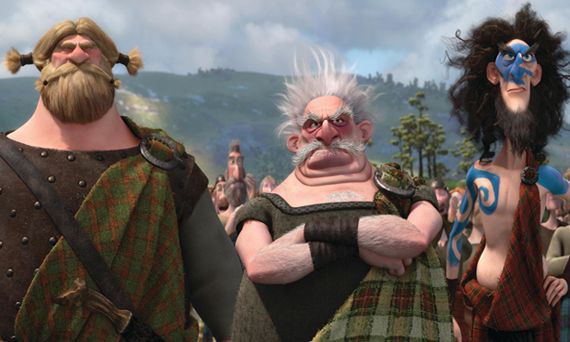 | ||
| The lords of three Scottish clans from Disney/Pixar's movie Brave (2012). |
The colorful tartan pattern seems to have originated in Flanders and came to the Highlands through the Lowlands. Sixteenth century writers note that the plaids of chiefs were colored and those of their followers were brown, indicating that any differentiation in color was a mark of social status rather than being connected with a particular clan. The clan system itself had been destroyed after the Scottish rebellion of 1745, when acts of Parliament removed chiefs from their jurisdictions and banned any Highland costume. This last act wasn't lifted until 1782, at which point the general population of the Highlands, having become used to trousers, didn't see any reason to return to the traditional belted plaid or tartan, or the new convenient kilts (invented in 1727, a topic for another post!) The upper classes, on the other hand, enthusiastically picked up the traditional garb reclaiming their lost 'heritage'.
The romantic movement had swept in, bringing with it the cult of the noble savage. The endangered traditional Highlander fit perfectly into this romantic notion. Romanticized Scottish history was given a further boost when King George IV made a momentous visit to Edinburgh in 1822. The King wished to see Highlanders in their traditional garb, and thus created a huge demand for tartans. The biggest manufacturing firm was William Wilson and Son of Bannockburn. Messrs., which released a "Key Pattern Book" in 1819 when the royal visit was first announced, showing samples of their various tartans and which clan they belonged to. When the King finally arrived in Scotland, he himself was dressed in a kilt and gave a toast to "the chieftains and clans of Scotland."
But the most important figures in the creation of clan tartans were the brothers Allen, an eccentric pair who often appeared at fashionable events dressed "in all the extravagance of which the Highland costume is capable-- every kind of tag and rag, false orders and tinsel ornaments." In 1829 they presented their aristocratic patron, Sir Thomas Dick Lauder, with a manuscript entitled "Vestiarium Scoticum", or The Garde-robe of Scotland. According to the brothers, this manuscript had belonged to John Leslie, Bishop of Rosss, the confidant of Mary Queen of Scots. Supposedly it had been written much earlier by a knight named Sir Richard Urquhart, and featured descriptions of the different clan tartans. But it wasn't until 1842, and under the new patronage of Lord Lovat, that the Vestiarium was published in a lavish limited edition with colored illustrations. Then in 1844, the Allen brothers published an even more lavish folio, titled "The Costume of the Clans", which cited ancient sources and claimed that Highland dress was actually a relic of the universal dress of the Middle Ages.
Unfortunately for the Allen brothers, their works received little notice. They themselves were discredited in 1847. After making numerous claims of royal blood, the brothers, who had at this point changed their name to Sobieski Stuart, were exposed as phonies in an editorial in the Quarterly Review. The brothers never recovered, and their works never gained a great amount of publicity. However, the idea of clan tartans was growing ever more popular, and the rest of the century saw the publication of numerous books of clan tartans, all derived from the Vestiarium.
There is so much more fascinating detail to this story than what I have put here, so if you'd like to learn more I highly recommend the article The Highlander Myth by Hugh Trevor Roper.
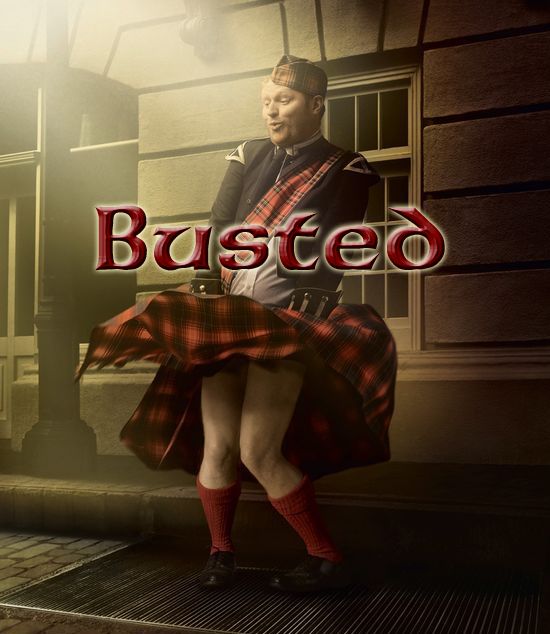 |
| Photo Credit |


 Posts
Posts

